Dryers are one of the most commonly used appliances in any home — and one of the most overlooked when it comes to safety.
Most homeowners assume that if their dryer turns on and runs, everything is fine. But in reality, hidden airflow problems and lint buildup inside the vent system can create serious fire risks over time.
If you live in Long Island or Queens, where many homes have longer vent runs, basement setups, or older duct systems, the risk can be even higher.
This guide breaks down the warning signs, causes, and real risks associated with dryer fires — and what you can do to prevent them.
🔥 Why Dryer Fires Happen
🔍 The Real Cause Isn’t the Dryer Itself
Most dryer-related fires are not caused by defective appliances.
Instead, the leading cause is:
👉 Restricted airflow due to lint buildup in the dryer vent system
When your dryer runs, it produces:
- Heat
- Moisture
- Lint particles
If these aren’t properly vented outside, they accumulate inside the system.
⚠️ How Lint Becomes a Fire Risk
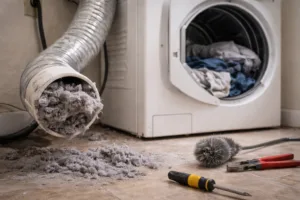
Lint is extremely flammable. When combined with heat and restricted airflow, it creates a dangerous environment.
Here’s what happens step-by-step:
1. Lint Builds Up in the Vent
Over time, lint collects inside the ductwork.
2. Airflow Becomes Restricted
Hot air and moisture can’t escape efficiently.
3. Heat Gets Trapped
Temperatures inside the system increase.
4. Dryer Overheats
The system works harder and hotter than intended.
5. Fire Risk Increases
At this point, ignition becomes possible.
⚠️ Warning Signs Your Dryer May Be a Fire Hazard
Many homeowners miss early warning signs. Catching these early can prevent serious damage.
🚨 Performance-Based Warning Signs
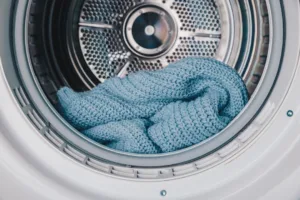
Clothes Take Longer to Dry
If one cycle becomes two or three, airflow is likely restricted.
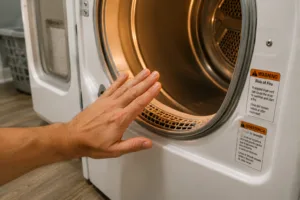
Dryer Feels Extremely Hot
A properly working dryer should feel warm — not dangerously hot.
Dryer Shuts Off Mid-Cycle
This may indicate overheating protection kicking in.
🔥 Sensory Warning Signs
Burning Smell During Operation
This is one of the most serious warning signs. Stop using the dryer immediately.
Excess Heat in Laundry Room
If the room feels hot or humid, airflow may not be escaping properly.
🧠 System Warning Signs
Error Codes on Modern Dryers
Common codes tied to airflow include:
- LG d80, d90, d95
- Whirlpool AF
- Samsung HE or temperature errors
These codes often indicate restricted airflow — not just a faulty appliance.
🧼 Visible Signs Around the Dryer
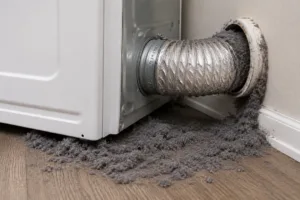
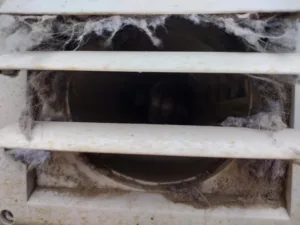
Lint Around the Dryer or Vent Opening
This suggests the system is not venting properly.
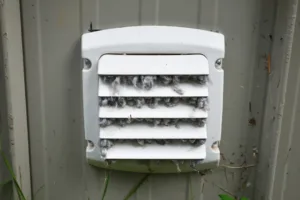
Exterior Vent Flap Not Opening
A blocked or weak airflow system won’t push the flap open fully.
🧠 What Causes Dryer Vent Fire Risks?
Understanding the root causes helps prevent future problems.
🧱 Common Causes of Restricted Airflow
| Cause | Why It’s Dangerous |
|---|---|
| Lint buildup | Highly flammable material accumulates |
| Crushed ducting | Restricts airflow behind the dryer |
| Long vent runs | More space for lint to collect |
| Multiple bends | Creates resistance in airflow |
| Improper materials | Flexible ducts trap lint easily |
🔧 Improper Installation Issues
Many homes have vent systems that were never optimized.
Common Installation Problems:
- Excessively long vent paths
- Too many turns or elbows
- Poorly secured connections
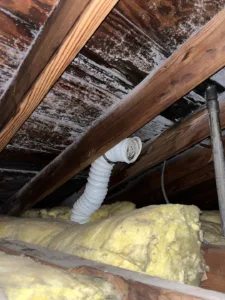
- Venting into attics or crawlspaces
These issues reduce efficiency and increase fire risk.
📍 Why Long Island & Queens Homes Are at Higher Risk
Dryer vent systems in this area often present unique challenges.
🏠 Typical Local Setups
Basement Laundry Rooms
These require long vertical or horizontal vent runs.
Multi-Floor Homes
Air must travel farther to exit the home.
Older Construction
Older materials are more prone to lint buildup and inefficiency.
🔄 Real-World Example
A typical Long Island setup might include:
- Dryer in basement
- Vent running 15–25 feet
- Multiple bends
- Exterior exit on side of home
👉 This type of setup significantly increases airflow resistance.
❌ Why Cleaning the Lint Trap Isn’t Enough
This is one of the biggest misconceptions.
🧠 What the Lint Trap Actually Does
The lint trap only catches larger debris.
What Still Gets Through:
- Fine lint particles
- Moisture-laden fibers
- Dust
These travel into the vent system and build up over time.
🔍 Where Lint Accumulates
Lint commonly builds up in:
- Long duct runs
- Elbows and bends
- Wall cavities
- Exterior vent caps
🛠️ Dryer Vent Cleaning vs Ignoring the Problem
📊 Comparison
| Situation | Result |
|---|---|
| Regular cleaning | Safe, efficient dryer |
| Ignored system | Overheating, inefficiency, fire risk |
🔥 What Happens When You Ignore It
Over time:
- Dryer works harder
- Energy usage increases
- Components wear out faster
- Fire risk continues to grow
🔧 What Professional Dryer Vent Service Includes
A professional dryer vent inspection goes beyond basic cleaning.
🔍 Full System Inspection
Technicians evaluate:
- Vent length
- Routing
- Materials
- Airflow performance
🧼 Deep Cleaning
Removes:
- Lint buildup
- Debris
- Obstructions
🔄 Airflow Testing
Ensures:
- Proper airflow is restored
- System is operating efficiently
🛠️ Repair & Optimization
If needed:
- Replace damaged ducting
- Shorten or reroute vent
- Improve overall performance
🧠 How Often Should You Clean Your Dryer Vent?
Cleaning frequency depends on usage and setup.
📊 Recommended Schedule
| Household Type | Frequency |
|---|---|
| Standard home | Once per year |
| Large family | Every 6–12 months |
| Homes with pets | More frequently |
| Long vent systems | More frequently |
⚠️ Signs You Should Clean Sooner
- Dryer is overheating
- Clothes aren’t drying
- Error codes appear
- Burning smell
🚨 When to Stop Using Your Dryer Immediately
Stop using your dryer if you notice:
- Burning odor
- Excessive heat
- Repeated shutdowns
- Visible lint accumulation
- Vent flap not opening
These are signs of a serious issue.
🧠 Dryer Fires Are Preventable
The good news:
👉 Most dryer fires are completely preventable
With proper maintenance:
- Airflow stays consistent
- Dryer operates efficiently
- Risk is minimized
🔥 Bottom Line
Your dryer isn’t dangerous by default — but it becomes dangerous when airflow is restricted.
Most issues start small:
- Slightly longer drying times
- Slight increase in heat
Over time, those small issues turn into bigger risks.
📍 Dryer Vent Safety in Long Island & Queens
Given the common home setups in this area, routine dryer vent inspection and cleaning isn’t just recommended — it’s essential.
If you’re noticing any of the warning signs in this guide, it’s worth having your system checked before it becomes a bigger problem.
Dryer Fire Hazard FAQs
Dryer fires are often preventable, but many homeowners do not recognize the warning signs until airflow problems become serious. These FAQs explain what makes a dryer unsafe, what symptoms to watch for, and how dryer vent cleaning and inspection help reduce fire risk.
Yes. A clogged dryer vent can become a serious fire hazard because lint is highly flammable and restricted airflow allows heat to build up inside the system. When hot air and moisture cannot escape properly, the dryer operates at higher temperatures and the fire risk increases.
Common warning signs include clothes taking longer to dry, a dryer that feels unusually hot, a burning smell during operation, excess lint around the appliance, increased humidity in the laundry room, and an exterior vent flap that does not open properly. These symptoms often point to restricted airflow in the vent system.
Yes. Lint buildup is one of the biggest reasons dryer fires happen. Even when the lint trap is cleaned regularly, fine lint particles still move into the vent system over time. If enough lint accumulates and heat builds up, the conditions become much more dangerous.
Poor airflow traps heat and moisture inside the dryer and vent line. That causes the appliance to run hotter and work harder than it should. When this is combined with lint buildup, the system becomes less efficient and more likely to overheat, which increases fire risk.
Cleaning the lint trap is important, but it is not enough by itself. The lint screen only catches part of the debris. Smaller particles still travel into the vent system, where they can collect in the ductwork and create airflow restrictions over time.
For many homes, dryer vent cleaning should be done about once per year. Homes with pets, larger families, frequent laundry use, or long vent runs may need service more often. If warning signs appear sooner, it is smart to schedule an inspection right away rather than waiting.
Yes. Some dryers will show airflow or temperature-related error codes, but not all of them do. A dryer may still overheat and struggle with poor airflow even if no code appears. That is why it is important to pay attention to warning signs like heat, smell, and longer drying times.
You should stop using the dryer immediately. A burning smell is a serious warning sign that lint buildup, overheating, or another issue may be present. Continuing to run the appliance could make the situation worse. The safest next step is to have the system inspected before using it again.
Older homes can have higher risk because they are more likely to have outdated vent materials, long vent runs, or changes made over time that reduce airflow. Older installations may also include duct materials that collect lint more easily or do not vent as efficiently as modern metal ducting.
Yes. Longer vent runs often create more resistance to airflow and more space for lint to accumulate. Multiple bends and hidden sections inside walls, ceilings, or basements can make the problem worse. These systems often need closer attention and more regular maintenance.
Thin foil and plastic-style ducts are usually more problematic because they can sag, tear, kink, and trap lint more easily. Rigid or semi-rigid metal ducting is generally a safer and more efficient option because it supports better airflow and is more durable over time.
Yes. Professional dryer vent cleaning helps remove hidden lint buildup, improve airflow, and identify damaged or unsafe ducting that may be contributing to overheating. It is one of the most effective ways to reduce fire risk and improve dryer performance at the same time.
You should stop using the dryer if it smells like something is burning, feels extremely hot, shuts off unexpectedly, or is taking much longer than normal to dry clothes. These signs suggest that airflow may already be severely restricted or the system may be unsafe to keep running.
Yes. If the problem is related to lint buildup, poor airflow, blocked venting, damaged ducting, or an inefficient vent route, Dryer Geeks can inspect the system and recommend the appropriate cleaning, repair, or replacement. If the issue is an internal appliance failure, a dryer repair technician may still be needed.