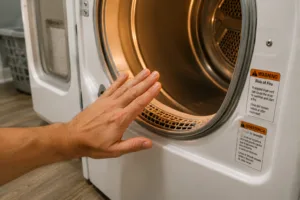
A disconnected dryer vent is one of those problems that can be easy to miss but important to fix. Your dryer may still turn on, heat up, and run through a full cycle, but if the vent system has come loose, separated, or disconnected, heat, moisture, lint, and exhaust may not be reaching the outside of your home.
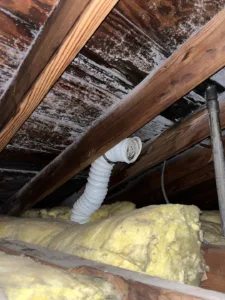
Instead, that air may be escaping behind the dryer, into the laundry room, inside a wall cavity, above a ceiling, into a basement, or into another hidden area of the property. Over time, this can lead to poor dryer performance, excess humidity, lint buildup, overheating, and potential safety concerns.
This guide explains what a disconnected dryer vent means, how to spot the warning signs, why dryer vents come loose, and when to schedule professional dryer vent repair.
What Is a Disconnected Dryer Vent?
A disconnected dryer vent means part of the dryer exhaust system has separated. This can happen at the transition hose behind the dryer, at a duct joint, inside a wall, in a ceiling, in a basement, near a booster fan, or close to the exterior vent cap.
The dryer vent system is supposed to move hot air, moisture, and lint from the dryer to the outside of the home. When the system disconnects, the exhaust escapes before it reaches the exterior vent.
Common Places Dryer Vents Disconnect
- Behind the dryer
- At the flexible transition hose
- At duct joints or seams
- Inside walls or ceilings
- In basement or crawlspace areas
- Near the exterior vent cover
- Around booster fan connections
If the problem is hidden, a professional dryer vent inspection may be needed to locate the issue.
Warning Signs Your Dryer Vent May Be Disconnected
A disconnected dryer vent can look similar to a clogged vent or dryer problem. The biggest clue is that air, heat, moisture, or lint is escaping somewhere it should not.
Clothes Take Too Long to Dry
If the dryer vent has come loose, exhaust may leak before it reaches the outside. This reduces airflow and can leave clothes damp after a full cycle.
The Laundry Room Feels Hot or Humid
A disconnected vent can dump hot, moist air into the laundry room instead of outdoors. This may make the room feel warm, damp, or uncomfortable while the dryer is running.
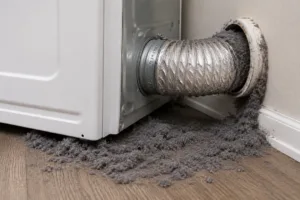
Lint Around or Behind the Dryer
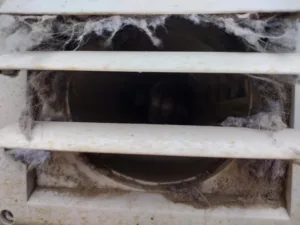
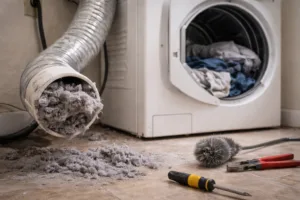
Visible lint around the dryer is a major warning sign. Lint should be trapped in the lint screen or carried through the vent system, not blown into the room.
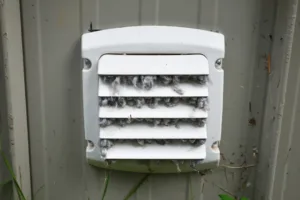
Weak Airflow Outside
If the dryer is running but very little air comes out of the exterior vent, the system may be clogged, crushed, or disconnected somewhere along the route.
Burning Smell or Excess Heat
A burning smell should never be ignored. If lint is building up near heat or airflow is severely restricted, stop using the dryer and have the system checked.
Why Dryer Vents Become Disconnected
Dryer vents can disconnect for several reasons. Some are simple, like a loose hose behind the dryer. Others are caused by poor installation, old materials, or hidden duct movement.
The Dryer Was Moved
Pulling the dryer forward for cleaning, flooring, painting, appliance replacement, or maintenance can loosen the vent hose. When the dryer is pushed back, the hose can kink, crush, or separate.
Poor Installation
If the vent was not secured properly, vibration and airflow pressure can cause the connection to loosen over time.
Crushed or Kinked Ducting
Flexible ducting can become compressed behind the dryer. When airflow is restricted, the connection may pull loose or create pressure inside the system.
Old or Unsafe Materials
Thin foil, plastic-style ducting, torn hose, and deteriorated vent materials are more likely to sag, tear, disconnect, or trap lint. In these cases, dryer vent replacement may be the better long-term solution.
Dryer Vibration
Dryers naturally vibrate during operation. If clamps, fittings, or connections are weak, that movement can slowly loosen the vent system.
Why a Disconnected Dryer Vent Should Be Fixed Quickly
A disconnected dryer vent is not just a minor performance issue. Even if the dryer still runs, the system may be releasing exhaust into the wrong area.
Moisture Can Build Up Indoors
Dryers release a large amount of moisture. If that moisture vents indoors, it can contribute to dampness, musty odors, and unwanted humidity.
Lint Can Collect Where It Does Not Belong
Lint buildup around the dryer, inside walls, or in utility spaces can create a mess and increase risk when combined with heat.
Dryer Performance Gets Worse
When airflow does not move properly, the dryer may take longer to dry clothes, run hotter, waste energy, or shut off early.
The Problem May Be Hidden
If the vent disconnects inside a wall, ceiling, basement, or crawlspace, the issue can continue for weeks or months before becoming obvious.
Disconnected Dryer Vent vs. Clogged Dryer Vent
These two problems can cause similar symptoms, but they are not the same.
| Issue | What Happens | Common Signs |
|---|---|---|
| Disconnected Dryer Vent | Air escapes before reaching outside | Lint indoors, hot laundry room, weak outside airflow |
| Clogged Dryer Vent | Air cannot move through the duct properly | Long drying times, overheating, airflow error codes |
In many cases, both problems can exist at the same time. A disconnected vent may also be full of lint, which is why dryer vent cleaning is often recommended along with repair.
Can You Reconnect a Dryer Vent Yourself?
If the vent hose is visibly loose directly behind the dryer, it may look simple to reconnect. However, reconnecting the hose does not always solve the full problem.
The vent may also be crushed, clogged, damaged, leaking air, or made with unsafe materials. If airflow is still weak after reconnecting the vent, the system should be inspected.
DIY May Not Be Enough If:
- The vent disconnected inside a wall or ceiling
- The duct is crushed, torn, or deteriorated
- The dryer still takes too long to dry
- The exterior vent has weak airflow
- You smell burning or notice excessive heat
- The vent uses unsafe foil or plastic materials
How Dryer Geeks Fixes Disconnected Dryer Vents
Dryer Geeks provides professional dryer vent repair services throughout Long Island and parts of Queens. When we inspect a disconnected dryer vent, we look at the full airflow path, not just the visible hose behind the dryer.
Our Repair Process May Include:
- Inspecting the dryer connection
- Checking the transition hose
- Locating loose or separated ductwork
- Evaluating visible and accessible vent sections
- Checking airflow at the exterior vent
- Securing loose connections
- Replacing damaged or unsafe ducting
- Cleaning lint buildup when needed
If the existing vent path is poorly designed, too long, or keeps causing problems, dryer vent re-routing may be recommended.
When Replacement or Re-Routing May Be the Better Fix
Sometimes a disconnected vent is only a symptom of a larger issue. If the vent system is old, unsafe, damaged, or poorly routed, simply reconnecting it may not be enough.
Dryer Vent Replacement
Replacement may be needed when ducting is torn, crushed, deteriorated, disconnected repeatedly, or made from unsafe materials.
Dryer Vent Re-Routing
Re-routing may be needed when the vent path is too long, has too many bends, exits in a poor location, or keeps restricting airflow.
Dryer Vent Installation
If a laundry area was remodeled, relocated, or improperly vented, professional dryer vent installation may be required to create a proper exhaust path.
What to Do If You Think Your Dryer Vent Is Disconnected
- Stop using the dryer if you smell burning or notice excessive heat.
- Look behind the dryer for a loose or detached hose.
- Check whether lint is collecting around the dryer or laundry room.
- Run the dryer briefly and check airflow at the exterior vent.
- Schedule a professional inspection if airflow is weak or the issue is hidden.
Need Help With a Disconnected Dryer Vent?
A disconnected dryer vent can lead to poor drying, excess moisture, lint buildup, weak airflow, and overheating. Dryer Geeks can inspect, repair, clean, replace, or re-route your dryer vent system depending on what the issue requires.
Serving Long Island and parts of Queens.
Contact Dryer Geeks or call (516) 987-7519 to schedule dryer vent service.