If your dryer is taking too long to dry clothes, the problem is often not the dryer itself. In many homes, long drying times are caused by restricted airflow inside the dryer vent system.
When heat and moisture cannot escape properly, clothes stay damp, drying cycles take longer, and the dryer has to work harder than it should. Over time, this can lead to overheating, higher energy use, repeated error codes, and unnecessary wear on the appliance.
This guide explains why dryers take too long to dry, how to tell whether the issue is your vent system or the dryer itself, and when to schedule professional dryer vent service.
Why Your Dryer Is Taking Too Long to Dry
A dryer removes moisture by moving heated air through the drum and pushing that moisture out through the dryer vent. If that airflow is blocked, restricted, leaking, or poorly routed, the dryer cannot remove moisture efficiently.
That means a load that should dry in one cycle may take two, three, or more cycles.
The Most Common Cause: Restricted Dryer Vent Airflow
The most common reason a dryer takes too long to dry is poor airflow. This often happens when lint, debris, crushed ducting, long vent runs, or vent installation problems prevent exhaust from leaving the home properly.
If the dryer is heating but clothes are still damp, the vent system should usually be checked before assuming the appliance is broken.
Common Dryer Vent Problems That Cause Long Drying Times
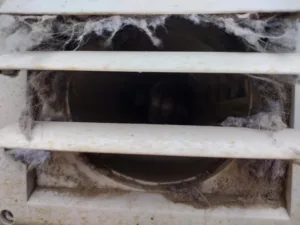
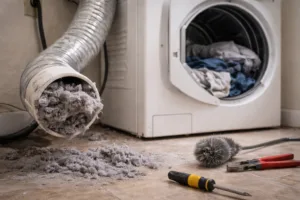
Lint Buildup Inside the Vent
Cleaning the lint trap is important, but it does not remove all lint from the system. Small lint particles still pass into the dryer vent line over time.
As lint builds up inside the duct, airflow becomes weaker. The dryer then has to run longer to remove the same amount of moisture.
Professional dryer vent cleaning removes lint from the full vent run, not just the area near the dryer.
Crushed or Kinked Dryer Hose
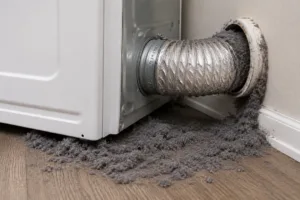
The flexible hose behind the dryer can become crushed when the dryer is pushed too close to the wall. It can also kink, sag, or disconnect.
Even a small restriction behind the dryer can reduce airflow enough to cause longer drying times.
If the hose is damaged, loose, or unsafe, dryer vent repair may be needed.
Disconnected Dryer Vent
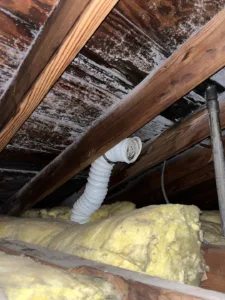
If part of the vent has come loose, air may be escaping before it reaches the outside of the home. This can cause weak exterior airflow, lint around the dryer, heat in the laundry room, and clothes that stay damp.
A disconnected dryer vent can happen behind the dryer, inside a wall, in a ceiling, in a basement, or near the exterior vent.
Too Many Bends or a Long Vent Run
Some homes have dryer vents that travel a long distance before reaching the outside. Basement laundry rooms, interior laundry rooms, condos, apartments, and larger homes often have longer vent runs.
Every bend and every extra foot of ductwork adds resistance. If the route is too long or poorly designed, the dryer may struggle even after cleaning.
In these situations, dryer vent re-routing may help create a shorter and more efficient path.
Outdated or Unsafe Vent Materials
Thin foil, plastic-style ducting, torn hose, and deteriorated materials can restrict airflow and collect lint faster than proper metal ducting.
If the vent system is old, damaged, or unsafe, dryer vent replacement may be the better long-term fix.
Exterior Vent Blockage
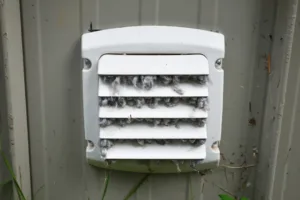
The exterior vent cover can become blocked by lint, debris, bird nesting material, damaged flaps, or outdoor obstructions.
If the vent flap barely opens while the dryer is running, airflow may be restricted somewhere in the system.
Signs the Problem Is the Dryer Vent, Not the Dryer
Many homeowners assume they need a new dryer when the real issue is the vent. Before replacing the appliance, look for signs of airflow restriction.
Common Vent-Related Signs
- Clothes take more than one cycle to dry
- The dryer feels hotter than usual
- The laundry room feels humid or warm
- There is lint around the dryer or vent opening
- Airflow outside feels weak
- The dryer shuts off before the cycle ends
- You notice a burning smell
- The dryer shows airflow-related error codes
If several of these signs are happening at once, the dryer vent system is a strong suspect.
When It Might Be an Appliance Problem
Not every long drying issue is caused by the vent. Sometimes the dryer itself has a mechanical, electrical, or heating problem.
Signs It May Be the Dryer
- The dryer has no heat at all
- The dryer will not start
- The drum is not spinning
- The dryer makes loud grinding or banging noises
- The control panel is malfunctioning
- The breaker trips repeatedly
If the dryer is heating normally but drying poorly, airflow should usually be checked first. If the dryer is not heating or not operating correctly, an appliance repair technician may also be needed.
Dryer Taking Too Long to Dry vs. Dryer Not Heating
These two issues are often confused, but they are not the same.
| Problem | Likely Cause | What to Check |
|---|---|---|
| Dryer heats but clothes stay damp | Possible airflow or vent problem | Vent cleaning, airflow, duct condition |
| Dryer has no heat at all | Possible appliance issue | Heating element, gas supply, thermostat, repair |
| Dryer overheats and shuts off | Often restricted airflow | Vent blockage, crushed duct, exterior airflow |
| Dryer runs forever but clothes stay wet | Vent issue or dryer issue | Airflow inspection and appliance check if needed |
Why Ignoring Long Drying Times Is a Problem
A dryer that takes too long to dry is more than an inconvenience. It can be a warning sign that the system is working harder than it should.
Higher Energy Use
When one load takes two or three cycles, the dryer uses more energy than necessary.
More Wear on the Dryer
Longer run times place extra stress on motors, sensors, heating components, belts, and other dryer parts.
Overheating Risk
Poor airflow traps heat inside the system. This can cause the dryer to run hot or shut off as a safety response.
Lint Buildup and Safety Concerns
Lint buildup combined with heat can create a potential fire hazard. If you smell burning or the dryer feels extremely hot, stop using it until the system is checked.
How to Check Dryer Airflow Yourself
You can do a simple airflow check before scheduling service.
- Turn on the dryer.
- Go outside to the exterior dryer vent.
- Check whether strong air is coming out.
- Look to see if the vent flap opens fully.
- Notice whether the airflow feels weak, inconsistent, or blocked.
Weak airflow outside may indicate a clogged vent, crushed duct, disconnected vent, poor routing, or another airflow restriction.
This test does not replace a professional dryer vent inspection, but it can help you spot a likely problem.
What Dryer Geeks Checks During Service
Dryer Geeks helps homeowners across Long Island and parts of Queens identify why dryers are taking too long to dry.
Our Evaluation May Include:
- Checking the dryer connection
- Inspecting the transition hose
- Evaluating visible ductwork
- Checking exterior airflow
- Looking for lint buildup and restrictions
- Identifying crushed or disconnected ducting
- Determining whether cleaning, repair, replacement, re-routing, or booster fan service is needed
Which Dryer Vent Service Do You Need?
Long drying times can be caused by several different dryer vent problems. The right solution depends on what is actually restricting airflow.
| What We Find | Possible Service |
|---|---|
| Lint buildup inside the vent | Dryer Vent Cleaning |
| Crushed, loose, or damaged ducting | Dryer Vent Repair |
| Old foil, plastic, or unsafe materials | Dryer Vent Replacement |
| Too many bends or an inefficient route | Dryer Vent Re-Routing |
| New dryer or laundry room setup | Dryer Vent Installation |
| Long vent run that needs extra airflow support | Dryer Booster Fan Service |
Why Long Island and Queens Homes Often Have Dryer Airflow Problems
Many homes in Long Island and Queens have laundry setups that make dryer vent airflow more complicated.
Common Local Setup Issues
- Basement laundry rooms
- Finished basements
- Long horizontal vent runs
- Older duct materials
- Interior laundry rooms
- Condos, apartments, and multi-unit properties
- Laundry room renovations or relocations
These layouts can make lint buildup, weak airflow, and long drying times more likely.
When to Schedule Dryer Vent Service
You should schedule service if your dryer consistently takes too long to dry or if the problem is getting worse over time.
Schedule Service If You Notice:
- Clothes are still damp after one full cycle
- The dryer is hot to the touch
- The laundry room feels humid
- Lint is collecting around the dryer
- The exterior vent has weak airflow
- The dryer shuts off before finishing
- You smell burning
- Error codes are appearing
Need Help With a Dryer Taking Too Long to Dry?
If your dryer is taking too long to dry, the vent system may be the real issue. Dryer Geeks can inspect the system, identify airflow restrictions, and recommend the right service based on what your dryer vent actually needs.
Serving Long Island and parts of Queens.
Contact Dryer Geeks or call (516) 987-7519 to schedule dryer vent service.
Dryer Taking Too Long to Dry FAQs
Long drying times are often caused by poor dryer vent airflow, lint buildup, damaged ducting, or an inefficient vent route. These FAQs explain what to check and when professional dryer vent service may be needed.