Not every dryer vent problem is solved with a cleaning. In fact, many dryer vent systems we inspect have deeper issues that can affect airflow, safety, performance, and code compliance.
At Dryer Geeks, we do not look at dryer vent service as a quick in-and-out job. We inspect the full vent system to understand what is actually happening, why the dryer is struggling, and whether the system is safe, efficient, and properly installed.
Dryer Geeks is also listed through CSIA as a Certified Dryer Exhaust Technician provider, with Albert Whitelaw shown as CDET certified. That matters because dryer exhaust systems are not something to guess on. They need to be inspected, cleaned, repaired, and corrected with the right knowledge.
Some companies inspect vents mainly to sell a cleaning. Some talk about safety and code without actually understanding what a compliant dryer vent system should look like. Dryer Geeks takes a different approach. We are here to identify the real issue and recommend the right solution, whether that is dryer vent cleaning, dryer vent repair, dryer vent replacement, dryer vent re-routing, booster fan service, or a full dryer vent inspection.
Dryer Vent Inspections Should Be About Safety, Not Just Sales
A dryer vent inspection should not be treated like a sales pitch. The purpose of an inspection is to understand the condition of the vent system and identify anything that could create poor airflow, repeated clogs, overheating, moisture problems, fire hazards, or code compliance concerns.
Unfortunately, many homeowners are told they only need a basic cleaning when the real problem is something else entirely. A clogged vent may be part of the issue, but it is not always the full story.
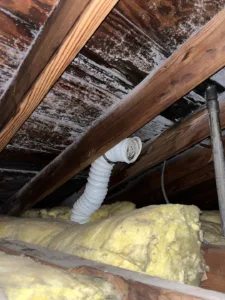
A dryer vent system can look simple from the outside, but hidden issues can exist behind the dryer, inside walls, above ceilings, in basements, in crawlspaces, around booster fans, or at the exterior termination. That is why a complete inspection matters.
Sometimes Cleaning Alone Is Not Enough
Dryer vent cleaning is important when lint buildup is restricting airflow. But if the vent is crushed, disconnected, improperly routed, made from unsafe materials, or not installed correctly, cleaning alone will not fix the system.
That is where many companies fall short. They may clean the vent line, collect payment, and leave without addressing the underlying condition that caused the problem in the first place.
At Dryer Geeks, our goal is to help identify what the system actually needs. Sometimes the right solution is cleaning. Sometimes it is repair. Sometimes the system needs to be replaced, re-routed, or brought closer to proper dryer exhaust standards.
CSIA Verified Dryer Exhaust Knowledge Matters
Dryer Geeks is listed in the CSIA directory, and Albert Whitelaw is shown with CDET certification. CSIA lists Dryer Geeks in East Islip, NY with the phone number (516) 987-7519 and Albert Whitelaw as CDET certified. This gives homeowners another way to verify that they are working with someone who takes dryer exhaust safety seriously.
This matters because dryer vent systems involve more than lint removal. A proper dryer exhaust system should move heat, moisture, and lint from the dryer to the outside of the building safely and efficiently. When the system is not built, cleaned, or maintained correctly, performance and safety problems can develop.
Why Certification and Real Inspection Experience Matter
Dryer vent work is often treated like a simple add-on service, but it requires an understanding of airflow, duct materials, vent length, elbows, termination points, booster fans, clearance issues, and safety hazards.
Homeowners should be cautious of companies that make big claims without being able to explain what they are inspecting, what code-related concerns they found, or why a certain repair is actually needed.
Dryer Geeks does not rely on scare tactics. We inspect the system, explain what we see, and recommend the practical next step.
Camera Inspections Help Confirm System Integrity
Some dryer vent problems are not visible from the laundry room. A vent may run through walls, ceilings, basements, crawlspaces, or long horizontal sections before reaching the outside. In those situations, a visual check behind the dryer is not enough.
Camera inspections can help evaluate hidden areas of the dryer vent system and provide a better understanding of what is happening inside the duct. This can be especially helpful when the dryer has repeated airflow problems, recurring clogs, unknown routing, weak exterior airflow, or suspected damage.
What Camera Inspections Can Help Identify
- Heavy lint buildup inside the duct
- Disconnected or separated duct sections
- Crushed, sagging, or damaged areas
- Unexpected bends or routing problems
- Obstructions inside the vent line
- Improper materials or transitions
- Evidence that the system is not exhausting properly
- Conditions that may require repair, replacement, or re-routing
A camera inspection is not about upselling. It is about confirming system integrity. If a vent system cannot be seen clearly from the outside, camera inspection can help make the recommendation more accurate.
Why System Integrity Matters
A dryer vent system should be continuous, secure, properly routed, and capable of moving exhaust outdoors. If the system has gaps, leaks, poor connections, crushed sections, or hidden blockages, the dryer cannot perform correctly.
Poor system integrity can allow lint, moisture, and hot air to escape into areas where they do not belong. That can create hidden buildup, moisture issues, poor airflow, and repeated dryer performance problems.
Proper Dryer Vent Cleaning: Why It Is Important
Proper dryer vent cleaning is not just pushing a brush through part of the duct and calling it done. A real cleaning should address the full vent run, improve airflow, and help reduce lint buildup in the system.
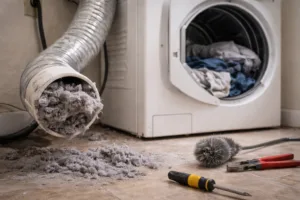
Lint does not only collect at the lint screen. Fine lint particles pass through the dryer and enter the vent line over time. As buildup increases, airflow becomes weaker. That can make the dryer run longer, get hotter, use more energy, and experience more strain.
What Proper Cleaning Helps With
- Improving airflow through the dryer vent system
- Reducing long drying times
- Helping the dryer exhaust heat and moisture outdoors
- Reducing lint buildup inside the vent line
- Lowering unnecessary strain on dryer components
- Helping identify damage, disconnections, or unsafe materials
- Supporting safer dryer operation
If cleaning is done poorly, only part of the lint may be removed. Worse, the cleaning may disturb lint without fully clearing it from the system. That is why the right tools, process, and inspection matter.
Improper Cleaning Can Miss the Real Problem
A company may clean the easy section of the vent but miss the actual restriction deeper in the system. They may also miss a disconnected duct, crushed hose, bad exterior cap, or booster fan issue.
That is why Dryer Geeks treats cleaning as part of the full system evaluation. The goal is not just to say the vent was cleaned. The goal is to restore airflow and make sure the system is functioning properly.
What Makes Dryer Geeks Different?
Dryer Geeks focuses on dryer vent systems as complete airflow systems. We are not just looking for lint. We are looking at how the dryer exhaust moves from the appliance to the outside of the home.
That includes the transition hose, ductwork, route, connections, exterior termination, vent materials, airflow performance, booster fan operation, and any visible conditions that may affect safety or compliance.
We Look for the Root Cause
If clothes are taking too long to dry, the cause might be lint buildup. But it could also be a crushed hose, a disconnected duct, a bad exterior vent cover, a long vent run, too many bends, improper materials, or an incorrectly installed system.
Our goal is to identify the root cause instead of treating every dryer problem the same way.
We Understand Dryer Vent Code Concerns
Dryer vent systems need to be installed correctly because they carry heat, moisture, and lint out of the home. When a system is not installed properly, it can create airflow restrictions and safety hazards.
Common code and safety concerns include improper materials, excessive duct length, too many elbows, screws inside the duct, disconnected sections, unsupported ductwork, and poor exterior termination.
Common Dryer Vent Problems We Find During Inspections
Many homeowners call because their dryer takes too long to dry or keeps overheating. During the inspection, we often find that the issue is not just one problem. It may be a combination of airflow, material, routing, and installation issues.
Improper Vent Materials
Thin foil, plastic-style ducting, and damaged flexible hose can restrict airflow, collect lint, tear easily, and create unsafe conditions. In many cases, these materials should be replaced with proper metal ducting.
Disconnected Dryer Vents
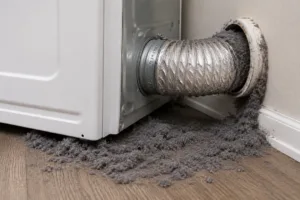
A disconnected dryer vent can allow hot air, moisture, and lint to escape behind the dryer, inside a wall, in a basement, or in another hidden area instead of venting outdoors.
If we find this issue, dryer vent repair may be needed before cleaning alone can solve the problem.
Crushed or Kinked Ducting
A crushed transition hose or kinked duct can reduce airflow immediately. This is common when a dryer is pushed too close to the wall or when flexible ducting is used improperly.
Long or Poorly Routed Vent Runs
Some vent systems are too long, have too many turns, or take an inefficient path to the outside. These systems may clog more often and cause repeated airflow problems.
In these situations, dryer vent re-routing may be the better long-term fix.
Blocked or Damaged Exterior Vent Covers
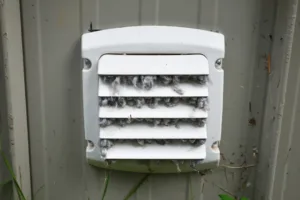
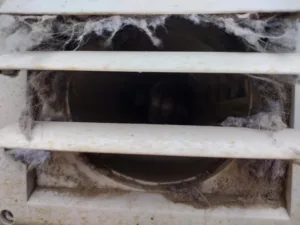
The exterior vent is where dryer exhaust leaves the home. If the cover is blocked, stuck, broken, clogged, or improperly designed, airflow can suffer even if the interior vent line is clean.
Booster Fan Issues
Some long dryer vent systems use booster fans to help move air. If the fan is clogged, not activating, noisy, or failing, airflow can still be restricted.
Dryer Geeks also provides dryer booster fan service for systems that need cleaning, troubleshooting, repair, or replacement.
Why Code Compliance Matters for Dryer Vents
Dryer vent code is not just paperwork. It exists because vent systems need to move hot, moist, lint-filled air safely and efficiently out of the home.
When a dryer vent system is not in compliance, the problem can affect more than inspection reports. It can lead to weak airflow, longer drying times, overheating, repeated clogs, and hidden lint buildup.
Common Non-Compliant Dryer Vent Conditions
- Plastic or unsafe flexible vent materials
- Excessive vent length
- Too many elbows or bends
- Disconnected duct sections
- Improper exterior termination
- Screws or fasteners protruding into the duct
- Unsupported or sagging ductwork
- Crushed transition hoses
- Vent systems that do not exhaust properly outdoors
Dryer Geeks helps identify and correct dryer vent systems that are not properly installed or are no longer performing safely.
We Recommend the Right Fix, Not Just the Easiest One
One of the biggest differences in our approach is that we do not assume every homeowner needs the same service. If a cleaning solves the problem, we recommend cleaning. If the system is damaged, we recommend repair. If the materials are unsafe, we recommend replacement. If the route is the problem, we recommend re-routing.
| What We Find | What May Be Needed |
|---|---|
| Lint buildup inside the vent | Dryer Vent Cleaning |
| Crushed, disconnected, or damaged ducting | Dryer Vent Repair |
| Unsafe foil, plastic, or deteriorated materials | Dryer Vent Replacement |
| Too many bends or an inefficient route | Dryer Vent Re-Routing |
| Long vent run with booster fan issues | Dryer Booster Fan Service |
| Unclear or hidden airflow problem | Dryer Vent Inspection |
Safety Hazards Are Easy to Miss
Many dryer vent hazards are hidden behind the dryer, inside walls, above ceilings, in basements, or near exterior terminations. A system can look normal from the outside while still having serious airflow or compliance issues inside.
That is why visual-only checks are not enough. A proper inspection considers airflow, duct condition, vent layout, material type, connection points, exterior exhaust, and warning signs from the dryer itself.
Warning Signs Homeowners Should Watch For
- Clothes take more than one cycle to dry
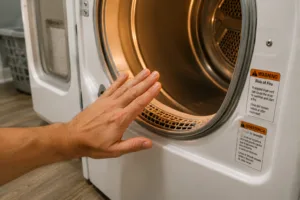
- The dryer feels hotter than normal
- The laundry room feels humid
- There is lint around or behind the dryer
- The dryer shuts off mid-cycle
- You notice a burning smell
- The exterior vent has weak airflow
- Airflow-related dryer error codes appear
If these symptoms are happening, the vent system should be inspected before the issue gets worse.
Dryer Geeks Serves Long Island and Parts of Queens
Dryer Geeks helps homeowners, landlords, property managers, and commercial laundry setups throughout Long Island and parts of Queens. Our focus is on making dryer vent systems safer, cleaner, more efficient, and properly installed.
Whether your dryer vent needs cleaning, repair, inspection, replacement, re-routing, booster fan service, or code-related corrections, we help determine the correct next step.
The Bottom Line
A dryer vent inspection should do more than confirm lint buildup. It should help identify whether the system is safe, properly installed, code-conscious, and actually capable of moving heat, moisture, and lint outside the home.
Dryer Geeks is here to do the job right, identify systems that are not in compliance, and recommend the service that actually solves the problem.
Contact Dryer Geeks or call (516) 987-7519 to schedule a dryer vent inspection.