Finding lint behind your dryer is more common than many homeowners realize, but a small amount of lint and a growing pile of lint are two very different things.
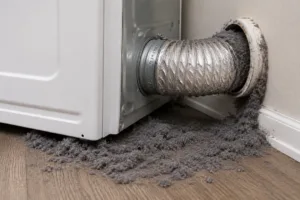
Some lint can escape during normal use, especially around the lint screen and the connection between the dryer and the vent. However, excessive lint behind the dryer may indicate a loose connection, damaged transition hose, restricted vent, poor airflow, or another problem within the dryer vent system.
If you’re constantly cleaning lint from behind your dryer, it’s worth figuring out where it’s coming from instead of assuming it’s normal.
Why Does Lint Build Up Behind a Dryer?
Your dryer removes moisture from clothing by moving heated air through the drum and exhausting that air through the dryer vent system. The lint screen catches much of the lint released from clothing, but it does not capture everything.
Small amounts of lint can travel into the exhaust system. When the dryer vent is properly connected and airflow is strong, that lint should move through the vent and exhaust outdoors.
When lint begins collecting behind the dryer instead, there may be a problem with the vent connection, airflow, ductwork, or dryer setup.
Common Reasons You May See Lint Behind Your Dryer
Loose Dryer Vent Connection
One of the most common causes is a loose connection where the dryer attaches to the vent.
If the transition hose is not secured properly, lint-filled exhaust air can escape into the laundry area rather than traveling through the vent system.
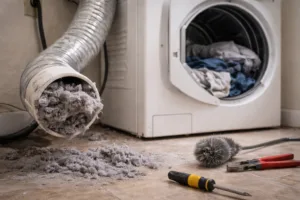
You may notice lint around the back of the dryer, on the floor, along the wall, or around the connection itself.
Damaged or Torn Transition Hose
The short section of duct connecting your dryer to the home’s vent system is known as the transition duct or transition hose.
Over time, this section can become crushed, torn, punctured, or disconnected when the dryer is moved.
Even a small opening can allow lint, warm air, and moisture to escape behind the appliance.
If the duct is damaged, professional dryer vent repair may be necessary to restore a proper connection.
A Clogged Dryer Vent
Lint behind the dryer can also be a sign that airflow through the vent system is restricted.
As lint accumulates inside the ductwork, the dryer has to push exhaust air through a smaller opening. This increased resistance can contribute to airflow escaping through weak connections or damaged sections of the system.
Routine dryer vent cleaning helps remove lint buildup and restore airflow through the exhaust system.
Crushed Dryer Vent Duct
Dryers are often pushed too close to the wall, especially in smaller laundry rooms.
When that happens, the transition duct behind the dryer can become crushed or sharply bent. A restricted duct reduces airflow and can trap lint near the dryer connection.
If your dryer cannot sit in its proper position without crushing the vent, the vent configuration may need to be adjusted.
Improper Vent Materials
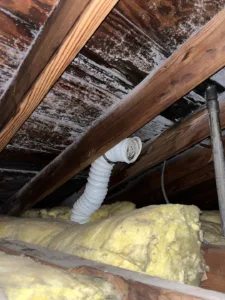
Older installations sometimes use thin foil or plastic-style ducting that can tear, collapse, or become damaged more easily than properly installed metal vent materials.
Damaged ductwork can allow lint to escape into the area behind the dryer and can also reduce airflow through the vent system.
Depending on the existing setup, dryer vent replacement may be a better long-term solution than repeatedly repairing damaged ductwork.
The Dryer Vent Is Disconnected
A vent connection can sometimes separate completely, especially after the dryer has been moved for cleaning, flooring work, appliance replacement, or maintenance.
When this happens, the dryer may be exhausting directly into the laundry room or wall cavity.
You may notice:
- Large amounts of lint behind the dryer
- Excessive heat in the laundry room
- Higher indoor humidity
- A musty or damp smell
- Lint collecting on nearby walls or floors
- Longer drying times
A disconnected vent should be corrected as soon as possible.
Is Lint Behind the Dryer Dangerous?
A few loose pieces of lint do not necessarily mean there is an immediate emergency. However, excessive lint behind the dryer should not be ignored.
Dryer exhaust contains heat, moisture, and lint. If that exhaust is leaking behind the appliance or into an enclosed space, lint can continue accumulating over time.
Lint is also combustible, which is one reason proper airflow and dryer vent maintenance are important parts of reducing dryer-related fire risks.
Can Lint Behind the Dryer Mean the Vent Is Clogged?
Yes, although lint behind the dryer does not automatically mean the entire vent is clogged.
A restriction farther downstream can increase pressure within the vent system and make existing connection problems more noticeable.
Other signs of a clogged or restricted dryer vent may include:
- Clothes taking more than one cycle to dry
- The dryer becoming unusually hot
- The laundry room becoming warm during operation
- A burning or overheated smell
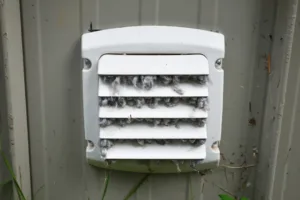
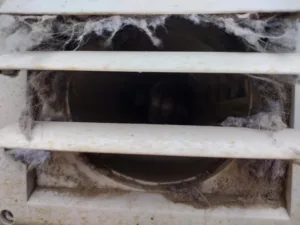
- Lint collecting around the exterior vent opening
- Weak airflow from the outside vent
- The dryer shutting off before clothes are dry
If you’re experiencing several of these symptoms together, the entire vent system should be evaluated.
What About Lint Underneath the Dryer?
Lint underneath the dryer can come from the same types of problems as lint behind it.
Air leaking from a loose or damaged vent connection can push lint underneath the appliance, where it may remain unnoticed for months or years.
Lint can also collect under the dryer from ordinary household dust, clothing fibers, pet hair, and debris from the laundry area.
If there is an unusually large amount of lint underneath the appliance, inspecting the dryer vent connection is a good place to start.
Why You Shouldn’t Just Push the Dryer Back Against the Wall
When homeowners notice lint behind the dryer, it’s tempting to reconnect the hose and push the appliance tightly against the wall.
That can sometimes make the problem worse.
Pushing the dryer too far back can crush or kink the transition duct, reducing airflow through the system. The dryer needs enough space for the vent connection to maintain a smooth airflow path.
If space is limited, the vent system may need a different configuration or professional dryer vent re-routing.
A Professional Dryer Vent Inspection Can Find the Real Cause
Lint behind the dryer is often only the visible symptom of a larger venting problem.
A professional dryer vent inspection can evaluate the complete system rather than simply checking the connection behind the appliance.
Depending on the setup, an inspection may identify:
- Loose or disconnected vent connections
- Damaged transition ducting
- Lint buildup inside the vent
- Poor airflow
- Improper vent materials
- Crushed or restricted ductwork
- Excessive bends
- Long or inefficient vent runs
- Blocked exterior vent covers
- Booster fan problems
Dryer Geeks Looks at the Entire Vent System
At Dryer Geeks, we don’t assume every dryer vent problem can be solved with a basic cleaning.
We evaluate the complete vent system to determine why lint is building up, why airflow may be restricted, and whether the problem involves cleaning, damaged ductwork, improper routing, or another issue.
If the vent simply needs cleaning, we’ll recommend cleaning. If there is a damaged connection, poor installation, or another condition affecting performance, we’ll explain the problem and recommend the appropriate solution.
Serving Long Island and Queens
Dryer Geeks provides professional dryer vent cleaning, inspections, repairs, replacements, and vent system services throughout Nassau County, Suffolk County, and Queens.
Whether you’re dealing with lint behind the dryer, long drying times, poor airflow, or a dryer that seems to be overheating, we can evaluate the system and determine what’s causing the problem.
Stop the Lint From Coming Back
Cleaning the lint from behind your dryer may make the area look better, but if the vent system is leaking or restricted, the lint will eventually return.
The better solution is to identify where the lint is escaping and make sure the dryer is exhausting properly outdoors.
If you’re repeatedly finding lint behind or underneath your dryer, schedule a dryer vent inspection with Dryer Geeks. We’ll inspect the system, check the airflow and vent connections, and recommend the right solution for your home.