A dryer that feels unusually hot, shuts off during a cycle, or leaves clothes extremely warm may be dealing with more than an appliance problem. In many cases, restricted airflow inside the dryer vent system can contribute to overheating.
When hot, moisture-filled air cannot move freely through the vent and exhaust outdoors, heat can build up inside the dryer and ductwork. That can make the dryer work harder, increase drying times, and put unnecessary stress on the appliance.
A clogged dryer vent is not the only possible cause of overheating, but it is one of the first things worth checking.
Can a Clogged Dryer Vent Make a Dryer Overheat?
Yes. A dryer relies on steady airflow to carry heat and moisture away from the appliance.
As lint accumulates inside the vent, airflow becomes more restricted. The dryer may continue producing heat, but that hot air cannot escape as efficiently as it should.
The result can be higher temperatures inside the dryer, longer drying cycles, and increased heat around the appliance and laundry room.
Professional dryer vent cleaning helps remove lint buildup and restore airflow through the exhaust system.
Why Airflow Is So Important
Your dryer does more than heat clothes. It also has to move a large volume of air through the drum, into the vent system, and outside the home.
That airflow carries moisture and heat away from your laundry.
When the exhaust path becomes restricted, the dryer may have trouble releasing that heat. Even if the dryer itself is operating normally, poor vent airflow can reduce performance.
Common Signs a Dryer May Be Overheating
Dryer overheating can show up in several ways. Some of the most common warning signs include:
- The top or sides of the dryer feel unusually hot
- Clothes are extremely hot at the end of a cycle
- The dryer shuts off before the cycle is finished
- Clothes take multiple cycles to dry
- The laundry room becomes unusually warm
- You notice a hot or burning smell
- The exterior dryer vent has weak airflow
- The dryer displays an airflow or overheating error code
Any one of these symptoms can have multiple causes, but several occurring together may point toward a dryer vent airflow problem.
How Lint Buildup Restricts a Dryer Vent
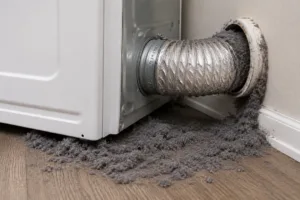
Lint is created naturally as clothing tumbles inside the dryer. The lint screen catches a large portion of it, but some lint still passes into the exhaust system.
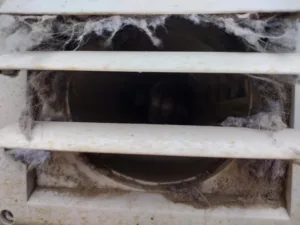
Over time, that lint can stick to the inside walls of the ductwork and gradually reduce the amount of open space available for air to move through.
The restriction may be especially severe in dryer vent systems with:
- Long vent runs
- Multiple turns or elbows
- Crushed ductwork
- Improper vent materials
- Blocked exterior vent covers
- Booster fan problems
- Older or poorly routed vent systems
Can an Overheating Dryer Shut Itself Off?
Yes. Many dryers include thermal protection designed to shut the appliance down if temperatures become too high.
A dryer that runs for a while and then suddenly shuts off may be responding to excessive heat.
Once the dryer cools down, it may start working again, which can make the problem seem inconsistent.
If this keeps happening, the issue should be investigated instead of repeatedly restarting the dryer.
Can a Clogged Vent Cause Long Drying Times Too?
Absolutely.
Restricted airflow affects both heat and moisture removal. If humid air stays trapped inside the dryer longer, clothes may remain damp even though the dryer is producing plenty of heat.
This is why a dryer can feel extremely hot while clothes still take two or three cycles to dry.
Long drying times are one of the most common signs that a dryer vent inspection may be needed.
What If the Dryer Is Hot but the Vent Isn’t Clogged?
A clogged vent is only one possible reason a dryer may overheat.
Other causes can include appliance component problems, damaged ductwork, a crushed transition hose, poor vent routing, or a blocked exterior termination.
That is why simply cleaning the lint screen or vacuuming behind the dryer does not always solve the problem.
The full exhaust system should be evaluated when overheating continues.
A Crushed Vent Can Cause Similar Problems
The short duct between the dryer and wall is particularly vulnerable to being crushed or kinked.
This often happens when the dryer is pushed too close to the wall.
Even a clean dryer vent can have poor airflow if this connection is flattened or sharply bent.
If the transition duct is damaged or improperly configured, dryer vent repair may be necessary.
Blocked Exterior Dryer Vent Covers
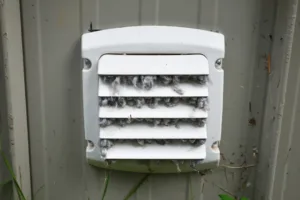
The exterior vent termination is another common source of airflow restriction.
Lint can accumulate around the vent cover, and some exterior flaps may become stuck or obstructed by debris.
If the vent cannot open properly while the dryer is running, exhaust air may back up through the system.
Homeowners may notice weak airflow outside even when the dryer is operating at full power.
Booster Fan Problems Can Affect Airflow
Some homes have long dryer vent runs that require a booster fan to help move exhaust air outdoors.
If the fan stops working, becomes clogged, or does not activate correctly, airflow through the vent can drop significantly.
Dryer Geeks also provides dryer vent booster fan service for systems that rely on these components.
Can an Overheating Dryer Be a Fire Risk?
Excessive heat and lint buildup are both conditions that should be taken seriously.
Lint is combustible, and dryer vent restrictions can cause heat to remain in areas where it should be moving freely outdoors.
An overheating dryer does not automatically mean a fire is about to occur, but repeated overheating should never be ignored.
Maintaining a clean, properly installed vent system helps reduce unnecessary heat buildup and keeps the dryer operating under better conditions.
Should You Stop Using an Overheating Dryer?
If the dryer becomes extremely hot, produces a burning smell, repeatedly shuts itself off, or appears to be operating abnormally, it is a good idea to stop using it until the cause can be identified.
Continuing to run the dryer without addressing the problem may increase wear on the appliance and allow an airflow issue to become worse.
How a Dryer Vent Inspection Helps
A professional dryer vent inspection looks beyond the lint screen and the few feet of ductwork visible behind the appliance.
The entire system can be evaluated for conditions that may be restricting airflow, including:
- Heavy lint buildup
- Crushed or damaged ductwork
- Disconnected vent sections
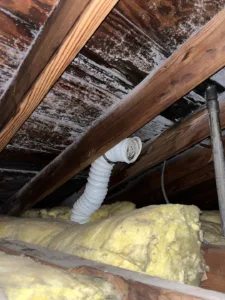
- Poor vent routing
- Improper materials
- Excessive vent length
- Blocked exterior vent covers
- Booster fan issues
Once the cause is identified, the appropriate solution may involve cleaning, repair, replacement, or re-routing.
Dryer Geeks Looks for the Cause, Not Just the Symptom
At Dryer Geeks, we do more than remove lint.
We evaluate the dryer vent system to determine why airflow is restricted and whether the problem involves buildup, damaged ductwork, poor installation, or another issue.
If cleaning is all the system needs, we’ll recommend cleaning. If the vent needs replacement or re-routing, we’ll explain what we found and why the additional work may be necessary.
Serving Long Island and Queens
Dryer Geeks provides dryer vent cleaning, inspections, repairs, replacements, and airflow solutions throughout Nassau County, Suffolk County, and Queens.
If your dryer is getting unusually hot, taking too long to dry clothes, shutting off during cycles, or showing other signs of restricted airflow, the dryer vent system may be part of the problem.
Don’t Ignore an Overheating Dryer
A dryer should generate heat, but it should not feel excessively hot or struggle to complete normal drying cycles.
If you suspect a clogged or restricted vent, schedule a dryer vent inspection with Dryer Geeks. We’ll evaluate the airflow, inspect the vent system, and recommend the right solution for your home.